



Advancing Data-Driven Education in South Sudan: From Diagnosis to Action through EMIS Systems Strengthening
Advancing Data-Driven Education in South Sudan: From Diagnosis to Action through EMIS Systems Strengthening
Location: Juba, South Sudan
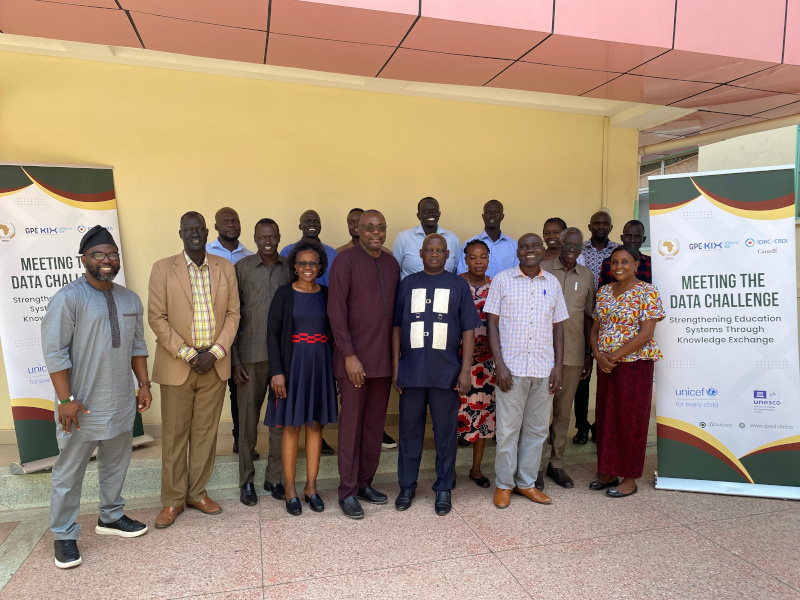
The African Union Pan-African Institute for Education for Development ( AU IPED ), through the Global Partnership for Education Knowledge and Innovation Exchange ( GPE KIX ) Africa 19 Hub a joint initiative with Canada’s International Development Research Centre ( IDRC ), has successfully concluded a three-day workshop from March 16 th -18 th in Juba, South Sudan, to support the strengthening of the country’s Education Management Information System (EMIS).
The workshop was undertaken in collaboration with the Ministry of General Education and Instruction (MoGEI) and brought together senior government leadership and technical teams from key departments, including EMIS, Planning and Budgeting, ICT, and Policy. The engagement enabled cross-functional dialogue and alignment across units responsible for the production, management, and use of education data, advancing a shared agenda for strengthening data systems and improving evidence-based decision-making. Strengthening EMIS remains critical for tracking progress toward Sustainable Development Goal 4 (SDG 4) as well as the Continental Education Strategy for Africa (CESA 2026–2035).
The engagement was officially opened by Mr. Adoumtar Noubatour, Head of AU IPED, alongside the Director General for Planning and Budgeting from South Sudan’s Ministry of General Education and Instruction Hon. George Maggo, and Mr. Mabor Tur, GPE KIX Focal Point for South Sudan. In their remarks, they underscored the central role of reliable and well-governed data systems in enabling effective planning, resource allocation, and improved learning outcomes across the education sector. “Without reliable data, planning remains guesswork, strong education systems are built on strong information systems.” – Hon. George Maggo, Director General for Planning and Budgeting from South Sudan’s Ministry of General Education.
Over the three-day engagement, AU IPED led technical consultations, system mapping, and collaborative working sessions with Ministry officials across EMIS, Planning, ICT, and Policy units. Through these engagements, participants traced how education data moves across the system - from handwritten
classroom registers and school-level record books to state-level aggregation and national reporting platforms. This process revealed an EMIS landscape that is largely manual, fragmented across multiple systems, and heavily dependent on partner-supported tools, with limited integration between data streams. In practice, this has resulted in parallel reporting processes, inconsistencies in key education indicators, and delays in data availability for decision-making.
Through facilitated discussions, AU IPED supported participants to critically examine bottlenecks in data flow, gaps in standardization, and institutional capacity constraints, as well as the implications these challenges have on planning, resource allocation, and system performance. Particular attention was given to how data is collected, validated, and transmitted across levels, highlighting points where data quality is compromised or lost.
To ground these discussions in operational realities, AU IPED conducted field visits to public schools in Juba, where the team observed firsthand how education data is generated, recorded, and transmitted. The visits provided critical validation of system-level findings - demonstrating the reliance on paper-
based tools, the burden placed on school-level staff, and the resilience of educators working within constrained environments, ensuring that proposed reforms are both practical and context-responsive.
Key Systemic Challenges Identified
The mission highlighted a number of persistent and interrelated challenges affecting the effectiveness of EMIS in South Sudan:
- Fragmented and parallel data systems, including EMIS, statistical systems, and partner-supported tools, resulting in inconsistencies in key education indicators and limited interoperability
- Limited technical capacity across national and subnational levels, particularly in data management, analysis, and system administration
- Heavy reliance on manual, paper-based data collection at school level, increasing risks of data errors, delays, and limited real-time access to information
- Inadequate ICT infrastructure and connectivity, including limited access to computers, internet, and power supply - especially in rural and hard-to-reach areas
- Weak coordination mechanisms among stakeholders and development partners, leading to duplication of efforts and misalignment with Ministry systems
- Low levels of domestic financing for education data systems, resulting in high dependence on external funding and limited sustainability
Priority Recommendations to Strengthen EMIS
In response, participants identified a set of priority, system-level reforms:
- Strengthening data governance frameworks by clearly defining institutional roles and responsibilities, establishing data standards, and reinforcing accountability mechanisms
- Developing and institutionalizing standardized data collection tools, including instruments to capture critical indicators such as reasons for student dropout and exclusion
- Establishing structured partner coordination mechanisms, led by the Ministry, to align investments, harmonize tools, and reduce duplication
- Designing and implementing a sustainable capacity development strategy, targeting EMIS personnel at national and subnational levels
- Investing in ICT infrastructure and system integration to improve data reliability, accessibility, and use across the education system
A Costed National EMIS Action Plan
A key outcome of the mission was the development of a costed national EMIS action plan, led by the Ministry and supported by AU IPED. The plan translates identified challenges into a set of prioritized, actionable interventions, providing a clear framework for implementation.
Structured around five core investment areas, namely; capacity development, data quality improvement, ICT infrastructure and system integration, governance and policy strengthening, and decentralization, the plan outlines specific activities required to strengthen the EMIS ecosystem at
national and subnational levels.
Indicative budget allocations - including targeted investments in training, infrastructure, data quality, governance, and decentralization, were proposed to support implementation. By linking priorities to costed interventions, the plan provides a sequenced and implementable roadmap to guide resource mobilization, partner alignment, and sustained system strengthening.
Looking Ahead
As South Sudan continues its transition from emergency response to long-term system strengthening, the outcomes of this mission represent an important step toward institutionalizing data-driven education planning and decision-making, in line with national priorities, Sustainable Development Goal 4 ( SDG 4 ), and Continental Education Strategy for Africa CESA 2026–2035 .
Closing the engagement, Adoumtar Noubatour, Head of AU IPED, emphasized the importance of sustained leadership and commitment:
“Transforming education systems requires us to confront difficult realities and make deliberate choices. Strengthening education data systems is not easy - but it is essential if we are to build systems that serve every learner and support informed decision-making at all levels.”
-
Share:


