



Connecting KIX Evidence to Education Data System Strengthening in Mozambique
Connecting KIX Evidence to Education Data System Strengthening in Mozambique
Reliable data helps governments to see what is working, where the gaps remain, and where investment will have the greatest impact. Yet producing evidence is only the first step. All too often, research findings, data, and lessons fail to connect with the decisions that shape education systems - decisions about what to reform, where to invest, and how to turn priorities into action.This is particularly important for education data. Having an Education Management Information System (EMIS) in place is only the starting point. The quality, timeliness, accessibility, and use of the data determine whether governments can effectively plan, allocate resources, monitor progress, and respond to emerging priorities. In this context, the Global Partnership for Education’s Knowledge and Innovation Exchange (KIX) Africa 19 Hub - a joint endeavour with Canada’s International Development Research Centre, led by UNESCO IICBA in collaboration with the African Union’s Pan African Institute of Education for Development (AU-IPED), works with countries to strengthen education data systems and support the use of evidence in education planning and decision-making. Through research, knowledge exchange, policy dialogue, capacity strengthening, and peer learning, the Hub seeks to ensure that evidence and knowledge are not only generated, but also translated into practical action to strengthen education systems.
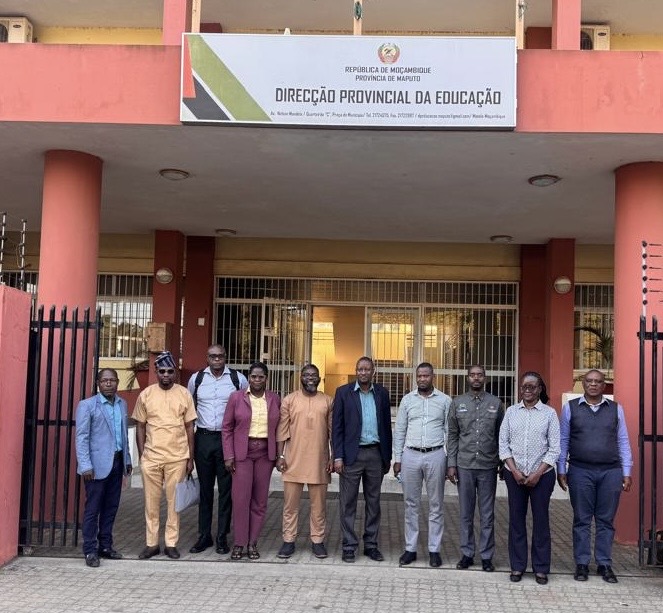
In Mozambique, this support included a two-day assessment of the country’s education data ecosystem, conducted in Maputo from 3-4 August 2026, bringing together stakeholders from the Ministry of Education and Culture, statistics, planning, ICT, provincial and district offices, and schools. The assessment provided an opportunity to look beyond the formal structures of EMIS and understand how data are collected, processed, validated, transmitted, and used in practice. The assessment found that Mozambique has important foundations in place, including an established EMIS, multiple education data subsystems, electronic data platforms, and processes for validating and disseminating education statistics. At the same time, significant challenges remain. Much of the data collected at school level is still paper-based, while gaps in ICT infrastructure, staff capacity and training, electricity, and internet connectivity contribute to delays, manual data entry, and risks to data quality.
The EMIS systems assessment exercise created an important opportunity for national stakeholders to identify their own priorities for strengthening the system. Discussions highlighted the need to expand electronic and decentralized data entry, improve interoperability between education information systems, strengthen data-quality processes, and build the capacity of staff responsible for planning, statistics, ICT, and data management at national, provincial, district, and school levels. The assessment also identified opportunities to explore offline and low-connectivity solutions and partnerships with telecommunications providers to make digital data collection more accessible to schools.
The KIX-supported process in Mozambique also opened space for South-South learning and exchange. Mozambique’s ICT stakeholders expressed interest in learning from Kenya’s experience in developing a nationally owned education information system, including approaches to local system development, interoperability, infrastructure, and stakeholder consultation. Through the KIX Africa 19 Hub and AU-IPED, these emerging areas of interest provide a basis for connecting Mozambican stakeholders with relevant expertise and country experiences, allowing solutions to be adapted to Mozambique’s institutional and operational context.
The two-day assessment reinforced the connection between better data systems and better education decisions. Mozambique already uses education statistics to inform teacher deployment, resource allocation, infrastructure planning, and other aspects of education planning. Strengthening EMIS is therefore not simply about digitizing data collection; it is about ensuring that decision-makers have timely, accurate, and relevant information when decisions about education resources and priorities are being made.
The assessment thus provided a practical entry point for the next phase of KIX support in Mozambique. Building on the findings, KIX, UNESCO IICBA, and AU-IPED supported a three-day national dialogue, held from 5–7 August 2026, that provided opportunities for peer learning and targeted capacity strengthening around the country’s priority EMIS needs. Presenting the assessment findings during the national dialogue moved the process beyond identifying gaps, helping to connect national priorities, evidence, technical expertise, and experiences from the field to practical actions for strengthening Mozambique’s education data system and its use for decision-making.
-
Share:


